

Our Words
Due North, By Design
An organization’s True North is more than a slogan or a strategic statement. It is the fixed point that defines identity, intention, and the principles that do not bend when markets shift or priorities evolve. When leaders take the time to articulate it clearly, it becomes the anchor for every choice the organization makes. And when the operating model is aligned to that True North—culture, leadership, structure, processes, employees, management, and technology—the organization stops behaving like a collection of disconnected parts and starts functioning as a coherent system.

Let Go of Your Biases: The Discipline Transformation Demands
Every transformation begins with a promise that things will be different. But the moment the work starts, something else becomes clear: every expert, every leader, every practitioner carries a bias. It’s not intentional. It’s human. And it shapes the transformation more than any framework ever will.
Across the industry, specialists see the world through the lens they know best. Leadership experts see leadership gaps. Technologists see digital opportunities. Process experts see inefficiencies. Change practitioners see resistance. None of them are wrong. But none of them are complete. Transformation is never a single discipline. It is the integration of many, and integration becomes impossible when each contributor insists their lens is the primary one.

Why System Integrations Fail — And Why Technology Is Rarely the Real Problem
When system integrations fail, organizations often blame the platform or the vendor. But the truth is more empowering:
Integrations fail because the organization isn’t aligned, structured, or equipped to deliver them.
The first question is not “What’s wrong with the system?” It’s “How do we operate?”
Answer that honestly — and the technology will finally have a chance to work.

Why Hidden Parts Destroy Maintenance Performance — and How Their Removal Signals a Deliberate, Controlled Organization
The end state is a maintenance organization that operates with intention. Every part is visible. Every movement is tracked. Every job is planned. Every schedule is reliable. Every technician trusts the system. Every leader has accurate data. Every process is deliberate. This is what eliminating squirrel piles enables. It is not about cleaning up drawers. It is about transforming the operating model. It is about shifting from reactive to proactive, from ad hoc to controlled, from workaround‑driven to process‑driven. It is about declaring, through action, that the organization is serious about reliability, discipline, and professionalism.
When a maintenance organization removes squirrel piles, it is making a statement about who it is and how it intends to operate. It is saying that it will no longer rely on luck or improvisation. It is saying that it values accuracy, control, and predictability. It is saying that it is building a mature, deliberate, high‑performance maintenance function. And it is demonstrating, in a visible and tangible way, that nothing in the organization is ad hoc—not even the parts in a drawer.

The Shift that Separates Managers from Builders: Why Executives must STOP Working IN the Business and START working ON it!
The simplest diagnostic for an executive is this: if you disappeared for thirty days, would the business fall apart or move forward. If it falls apart, you are working in it. If it moves forward, you are working on it. The answer is rarely comfortable, but it is always clarifying. And it forces the executive to confront the reality of their leadership. Are they building a business that depends on them, or a business that can outgrow them.

Forecast vs. Plan: Understanding the Difference That Determines Whether an Operation Runs Smoothly or Constantly Fights Fires
The difference between a forecast and a plan is not academic. It is operational. It is practical. It is measurable. It shows up in inventory levels, resource utilization, schedule stability, customer satisfaction, and financial performance. It shows up in whether the organization is constantly firefighting or consistently executing. It shows up in whether leaders feel in control or constantly surprised.
A forecast looks out one month and beyond. It anticipates. It prepares. It aligns. A plan looks at the next month, week, and day. It executes. It prioritizes. It delivers. When leaders understand the difference and treat each with the discipline it deserves, the entire operation becomes stronger.

Lifting People Up vs. Pushing People Down: Why Stretch Roles Build Organizations—and Double‑Duty Roles Break Them
If organizations want to retain talent, build capability, and create environments where people can thrive, they must choose the path that lifts. They must stop asking people to carry two jobs. They must stop normalizing burnout as a badge of honour. They must stop treating vacancies as emergencies that justify unsustainable decisions. And they must start seeing these moments for what they truly are: opportunities to grow the next generation of leaders.
The difference between lifting up and pushing down is the difference between building an organization that lasts and building one that slowly erodes under the weight of its own decisions. The choice is always there. The consequences are always real. And the organizations that choose wisely are the ones that people want to work for, stay with, and grow in. The ones that choose poorly eventually learn that burnout is not a cost of doing business—it is a cost of failing to lead.
Control First, Improvement Second: The Case for Spare‑Parts Discipline in Unstable Maintenance Environments
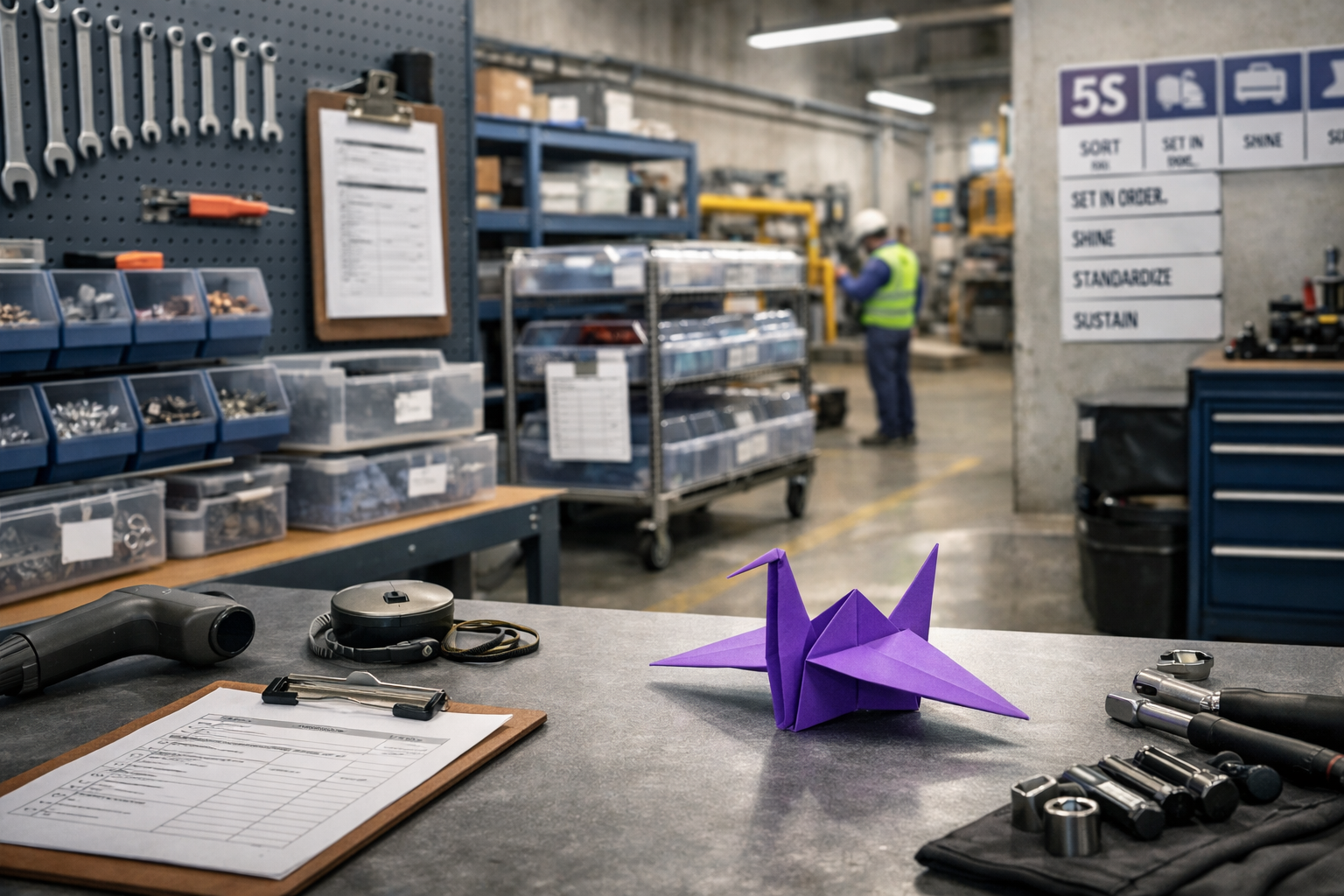
Bringing control to a reactive maintenance environment always begins with spare parts. When the parts process is unstable, everything downstream becomes unpredictable. Technicians compensate by hiding inventory, planners abandon planning, production loses confidence, and leaders end up paying for the same problem three different ways. The organization is not suffering from a lack of effort; it is suffering from a lack of control. Restoring that control is the turning point.

The Strategic Power of an Alumni Association: Why Organizations Need to Invest in the People Who’ve Already Walked Their Halls
Organizations with strong alumni networks see higher referral rates, stronger employer brands, increased business opportunities, and more resilient cultures. They benefit from a community of people who continue to care about the organization’s success long after they’ve moved on. They build a legacy that extends beyond any single leader, team, or era.
In the end, developing an alumni association is not just a strategic decision. It’s a cultural one. It reflects a belief that relationships matter, that people matter, and that the impact of an organization extends far beyond the walls of its offices. It acknowledges that the story of an organization is written not only by those who are there today but also by those who helped build it yesterday.
When organizations choose to invest in their alumni, they are choosing to invest in their own future. They are choosing to build a community that grows stronger over time. They are choosing to create a legacy that endures.
And in a world where talent is mobile, reputations are fragile, and change is constant, that kind of enduring community is not just an advantage. It’s a necessity.

Stop Treating Capability Matrices as Inventories — They’re One of the Most Powerful Development Tools You’re Not Using
In a world where roles evolve faster than job descriptions and capability gaps widen faster than hiring pipelines can keep up, organizations that rely solely on external recruitment will always be behind. Organizations that build capability from within will always be ahead. A capability matrix, used properly, becomes the backbone of that internal growth system. It democratizes development, clarifies expectations, and gives every employee a path forward that is both meaningful to them and valuable to the business.
The bottom line is simple. A capability matrix is not about who someone is today. It’s about who they can become. When you treat it as a development engine rather than an inventory, you unlock stronger pipelines, deeper engagement, and a workforce that grows in the direction your strategy demands. You give people more than a list of competencies. You give them a future they can see — and a path to get there.

Stabilize Before You Improve
mprovement is a multiplier. If the underlying system is stable, improvement multiplies performance. If the underlying system is unstable, improvement multiplies chaos. That is why the sequence matters. First you stabilize. Then you standardize. Only then do you improve. It is not glamorous, but it is the only path that works.
Leaders who understand this don’t chase speed. They chase consistency. They know that momentum is not created by dramatic gestures but by disciplined repetition. They know that clarity beats intensity. They know that transformation is not a leap — it is the cumulative effect of thousands of consistent steps taken in the same direction.
The organizations that win are the ones that respect the order of operations. They build the foundation before they build the future. They stabilize before they improve.

When Safety Isn’t the Problem: How a South American Mine Discovered the Real Issue
The mine had the worst safety record in the global company, and no one could explain why. TRIF was climbing, incidents were increasing, and every attempt to diagnose the problem produced more confusion than clarity. Leaders insisted safety was the number‑one priority. People said the right words. The aspiration was to evolve from a reactive, compliance‑driven mindset to one grounded in understanding and ownership.
But when we applied the Nine Essential Questions, and looked at the total Targeted Operating Model the truth surfaced quickly: the culture didn’t match the aspiration.
Employees believed safety mattered — but they didn’t see themselves as participants in it. Safety was something they complied with, not something they owned.

When Words and Actions Diverge, Culture Follows the Gap
If leaders want a culture of accountability, they must model accountability.
If they want a culture of transparency, they must practice transparency.
If they want a culture of trust, they must behave in ways that earn trust.
Culture is not a communications exercise. It is not a branding exercise. It is not a workshop. Culture is the echo of leadership behaviour — amplified across every level of the organization.
When leaders are congruent, culture becomes strong.
When leaders are incongruent, culture becomes confused.
And when organizations reward incongruency, culture becomes compromised.

Culture Is Top‑Down: Leaders Create the Behaviour They Complain About
Culture is not mysterious. It is not grassroots. It is not shaped by posters, slogans, or workshops. Culture is top‑down. You get what you display. You get what you tolerate. And you get it everywhere, whether you intended it or not.

Did you say 700%!?!?!!?
Leadership had tried every incentive imaginable—signing bonuses, attendance bonuses, referral bonuses, pizza lunches, raffles, posters. None of it mattered. People still left. The ones who stayed were exhausted, frustrated, and constantly training the next wave of new hires who would inevitably disappear. It would have been easy to blame the workforce or blame the generation. But the truth was far more uncomfortable: the organization had built a job, not a future. And people don’t stay in jobs that feel like dead ends.
The breakthrough came when the leadership team stopped asking how to get people to stay in the job and started asking how to help people move beyond it. If the work itself couldn’t change, the meaning of the work had to.

The Discipline Before the Blueprint: Why Every Target Operating Model Starts With a Rigorous Assessment
… the real strength of a TOM assessment comes from involving as many people as possible. The system lives in their day-to-day experience. When you bring people from across the organization into the assessment, you hear the real gaps—not the filtered ones. You build shared understanding, which is the foundation of alignment. And you create the conditions for adoption long before the blueprint is even drafted.

How Politics Destroys Improvement
Every improvement project is a chain of contributions. No single team can claim exclusive ownership because no single team could have delivered the result alone. When leaders allow people to fight over credit, they are not just tolerating politics—they are institutionalizing it. And once politics becomes the operating system, improvement becomes impossible.

When Identity Becomes the Constraint: Why Organizations Must Choose Their True North
True North is not a slogan. It is the operational truth that guides decisions, shapes behaviours, and defines the boundaries within which the organization must operate. When leaders align on that truth, frustration gives way to intentionality. Costs become explainable. Trade‑offs become deliberate. And the organization can finally move forward with coherence and confidence

The Double Edge of Positive Intent
Most importantly, we protect the client’s success, not their comfort. Our role is to guide, influence, and elevate. That requires candid communication, clear boundaries, and evidence‑based recommendations. We honour positive intent by helping clients succeed, not by avoiding difficult truths. The balanced approach is simple: assume nothing, observe everything, and act with integrity. Positive intent is a powerful principle when paired with accountability, boundaries, and professional judgment. It is not a shield for dysfunction; it is a starting point for partnership—one that must be grounded in clarity, courage, and a commitment to the truth.

The Force and the Target Operating Model: A Shared Blueprint for Alignment
In Star Wars, the Force is the invisible energy that binds the galaxy together. It shapes events, guides decisions, and creates coherence across an otherwise chaotic universe. In organizational transformation, a Target Operating Model plays a remarkably similar role. It is the unseen architecture that gives structure to purpose, behaviour, and execution. When leaders understand this parallel, they begin to see that a TOM is not just a diagram or a governance document—it is the animating principle that keeps an organization aligned, balanced, and capable of meaningful change.