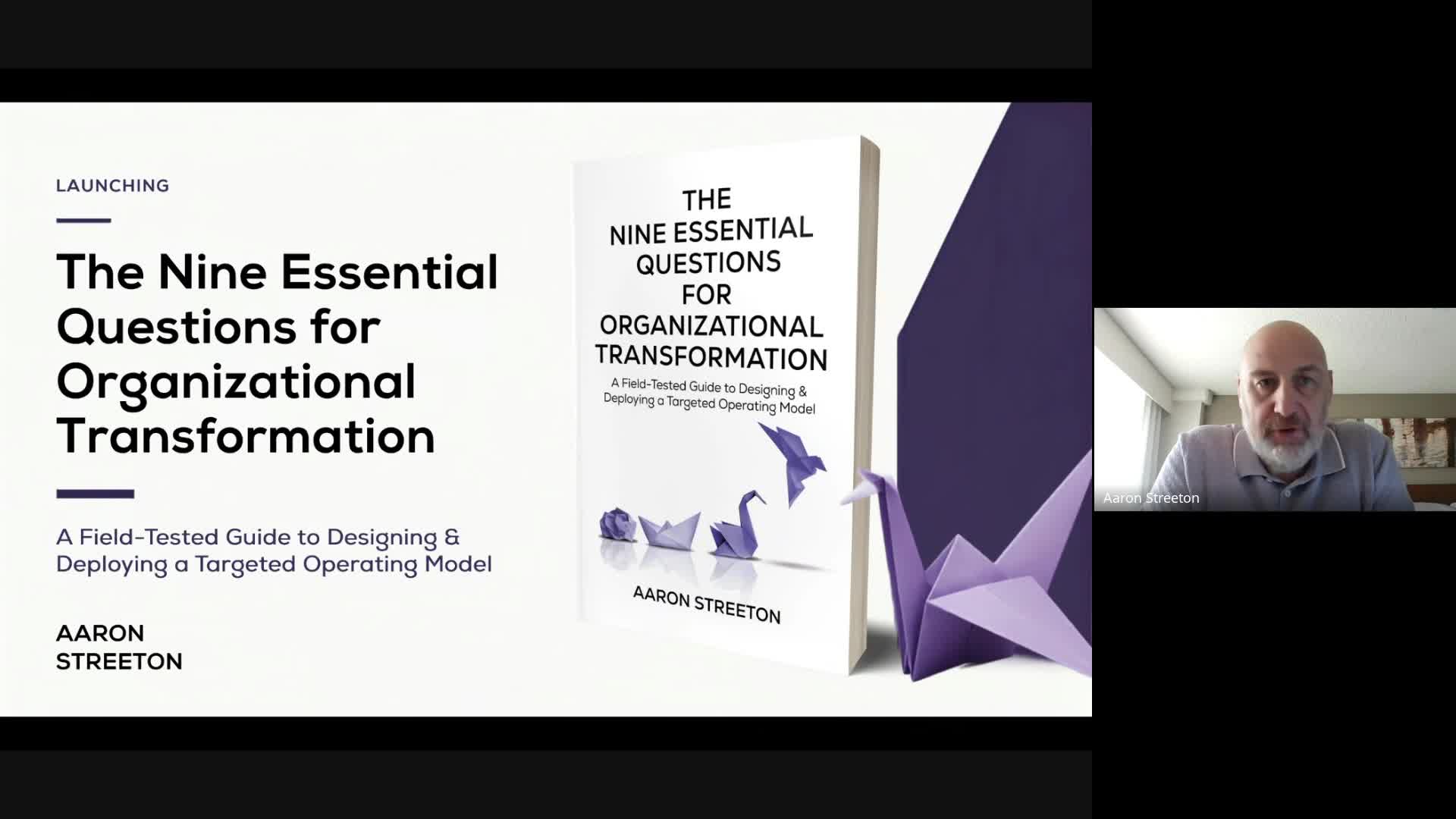
Ep, 123 — Nine Essential Questions: Aaron Streeton
Transformations seem to be in everybody's mind these days and after the last episode with Hanneke we have another deep dive into this topic. Our guest today, Aaron Streeton, has developed his own framework for change that he also describes in his book “The nine essential questions for operational transformation.” No wonder that we had to have him on the show :-) Aaron is a strategic operations architect & executive management consultant. He has 20+ years of experience strengthening organizational performance, operational resilience, and enterprise‑wide accountability. Aaron specializes in designing and leading integrated operating models and cross‑functional programs that drive financial discipline, service excellence, and sustainable growth. His career spans global transformations, large‑scale program delivery, and the creation of management systems that improve operational reliability, accelerate cash flow, and measurable EBITDA impact. Aaron is known for unifying executive teams around shared priorities, translating strategy into executable plans, and building the structures, processes, and cultures required for high‑performing organizations. In this episode of the podcast, we talk about: — Organizations Are Ecosystems, Not Machines: Treating an enterprise like a simple machine leads to failure; because everything is interconnected, pulling one lever triggers cascading ripple effects across the entire operating model. — Deconstructing the 70% Failure Rate: Knowing that most transformations fail isn't enough—executives often rely on vague aspirational slogans (like shifting from “telco to techco”) without defining what those changes actually mean operationally. — The Transformation GPS Analogy: Just like a navigation system, successful transformation requires knowing your exact starting coordinates (current state) and your destination (true north) so you can course-correct when roadblocks appear. — The 9 Essential Questions Framework: Aaron introduces his structured methodology, which anchors change around foundational goals, organizational culture, and alignment before diving into operational structures and technology. — Defining Culture as Behavior: Rather than treating culture as empty posters on a wall, organizations must define it as the collective personality and predictable behavioral patterns of its people. — Triage First, Optimize Second: When a business is bleeding cash or facing extreme turnover (e.g., severe bad debt or 700% churn), you must address immediate operational triage before launching long-term strategic projects. — Changing Tires on a Moving Train: Balancing ongoing business operations with transformation requires sequencing initiatives into manageable, high-impact steps rather than trying to overhaul everything at once. — The “Hear It, See It, Prove It” Assessment Model: To avoid acting solely on subjective executive perception, consultants must combine stakeholder interviews, direct workplace observation, and hard data validation to uncover true root causes. — Avoiding the Exception Trap: Rigorous data analysis (such as auditing thousands of historical work orders) prevents organizations from panicking over isolated human errors instead of systemic process breakdowns. — Ditching the Suit for Empathy: Building frontline trust requires cultural alignment and relatability—whether walking through an industrial coal mine in jeans or actively listening to employee concerns without corporate posturing. — Translating Experience into Action: Condensing decades of global multi-continental consulting experience into physical literature provides tangible, lasting frameworks for practitioners tackling complex organizational redesigns. You can reach Aaron via LinkedIn or his company website: https://www.tenguconsulting.ca/. Please reach out to us by either sending an email to hello@whatsyourbaseline.com or signing up for our newsletter and reading articles about process and architecture on our Substack… Go and subscribe at whatsyourbaseline.substack.com.